 The Elephant Escaped
Fang Di : Zayton Nugget
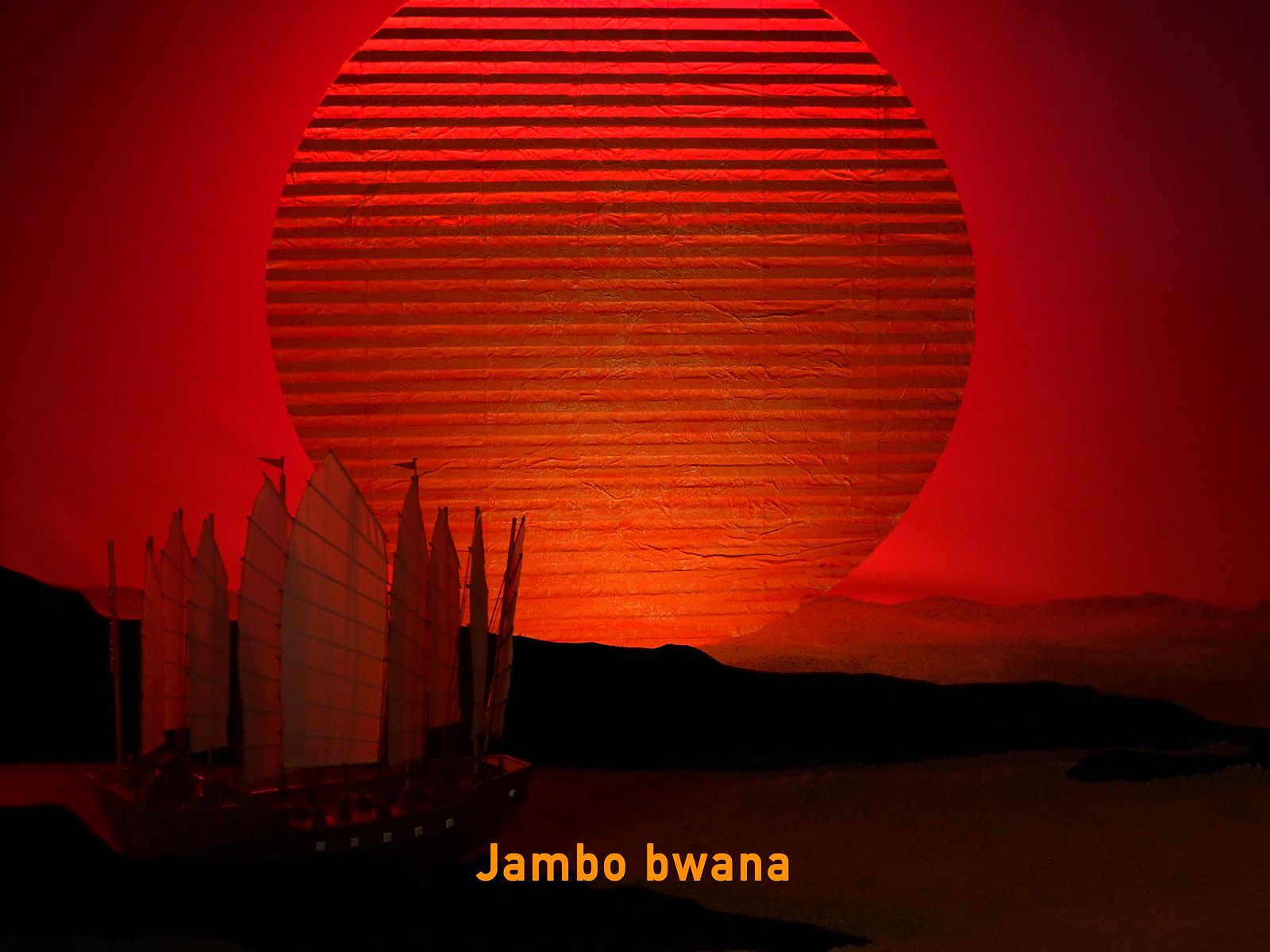
Fang Di, "Zayton Nugget", 2022, video, color, sound, 21'52", commissioned by MACA. "The Elephant Escaped" exhibition site. Photographer: Tsing Lim@AGENT PAY.
Fang Di
Zayton Nugget
Video, color, sound
21 min 52 sec
2022
Zayton Nugget is a three-part narrative collage about the fluidity of identity. The first part is about the adventures of the Lantern Festival in the Song and Yuan dynasties. The second part relates to Zheng He's final journey westwards in the fifteenth century; he landed at Manbasa (present-day Mombasa, Kenya), the farthest landmark on ancient Chinese maritime maps. The third part takes place in 1997, when a mariner from Mombasa comes ashore in Hong Kong and finds love on a visit of entertainment; during his long stretch of time at port, race, politics, and love mingle and settle. Life at sea comprises of eternal wandering, while life on land is always involved with ephemeral hedonism一neither ever changes much. Likewise, port cities are located at the nexus of competition between two forces or states. They are not only vehicles for rushing torrents of people, but also witnesses of changes in social structure, shifting materialities, and physical desires. People drift here aimlessly and can't help but sing, "The rivers and oceans are deep, but not as deep as love."
About the Artist
Fang Di was born in 1987 in Guangdong, Shenzhen, and is currently working for a state-owned enterprise in Shenzhen, China. His work discusses racism and social hierarchy through studies on news and political affairs. By switching between identities like a chameleon, he moves smoothly among different social classes, utilizing his unique sensitivity to absorb and resolve people's desires and wisdom gained through migration. He often uses various artistic languages to explore the entanglement and meaning of urban life, and bravely discovers how cultural special groups are defined within the inverted reality of globalization and nationalism, which has become an inevitable social fracture in today's world.