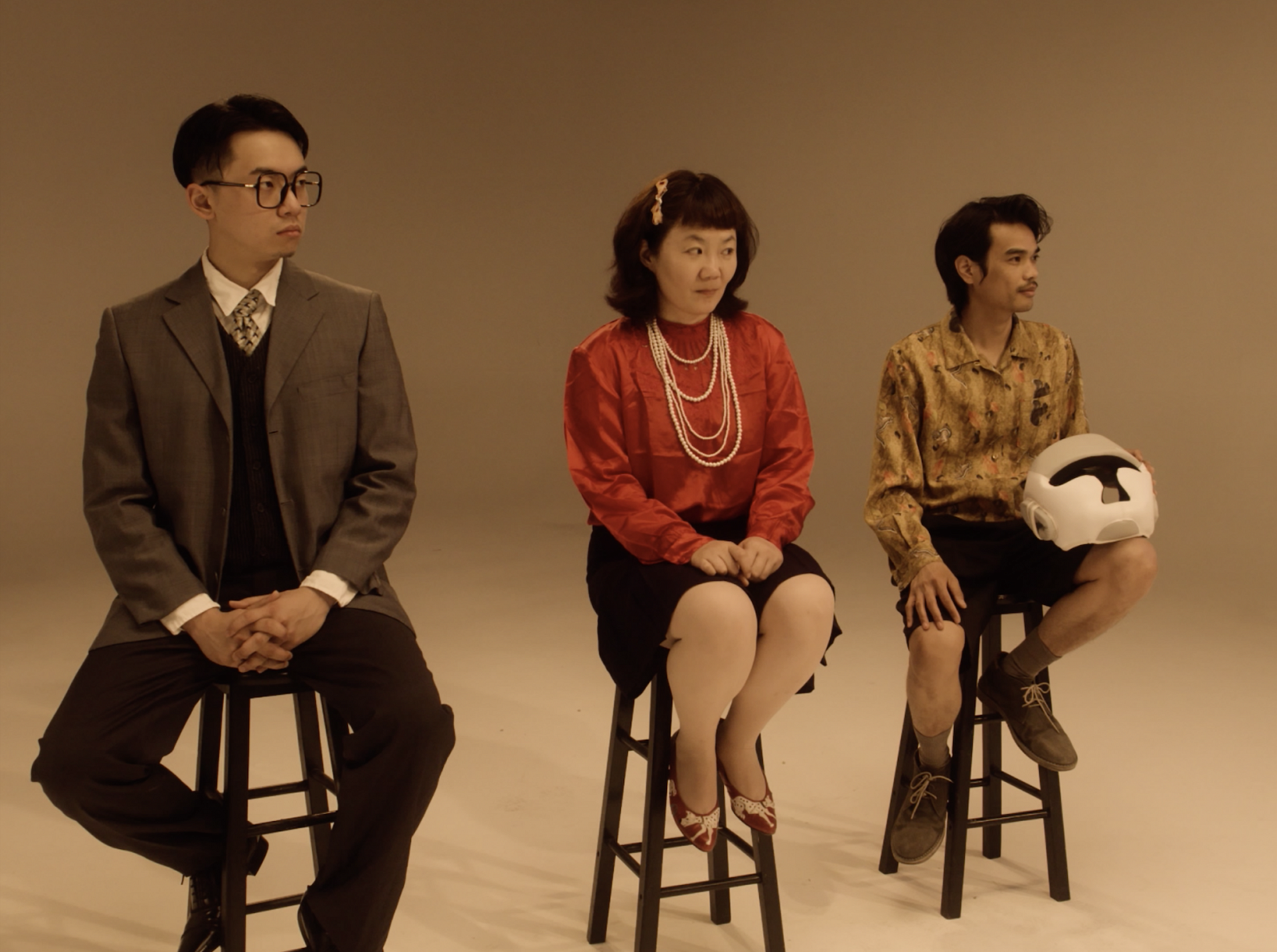
Hu Wei, “Hyper Architecture 2030” (still), 2021, video, color, sound, 20’41”, commissioned by MACA. Courtesy of the artist and MACA.
MACA’s “Bare Screen” commissions is delighted to present Hyper-Architecture 2030, Hu Wei’s most recent TV-inspired short film. With its strong sense of temporal dislocation and comedic undertones, this reality TV show revives our past visions of future residential space. From the 1960s to the early 2000s, the BBC produced Tomorrow’s World, an educational entertainment program that was intended to help the public learn about the latest developments in science and technology. The program also covered bold assumptions about the clothing, food, housing, and transportation of the future. These future visions activated Hu Wei’s interest in the untimely and absurd and prompted the question: What will it be like when visions of the future become part of the past?
Hyper-Architecture 2030 draws on the contemporary talent show format to create a reality show that took place in the 1990s. “Contestants” from different industries are invited to talk about their visions for ways of living in 2030. It’s a bit like the Zhengda Variety Show, which showed the world to a Chinese audience, mixed with the “15 minutes of fame” effect that Lucky 52 had. Interestingly, these proposals have become our current reality. Hyper-Architecture 2030 resurrects failed, unrealized, and unorthodox proposals for residential space. Co-op Zimmer, designed by 1920s architect Hannes Meyer for “nomadic” city workers; New Babylon, the lifelong artistic project of 1960s COBRA artist Constant Nieuwenhuys; a luxury underground bunker recently designed and promoted by a South Korean company to withstand North Korean nuclear tests; and the now-universal real estate developer-driven museums and smart cities appear in the film’s architecture competition segment, which is sprinkled with strange advertisements. The film helps us to reflect on how once-radical visions of the future have become mere sales pitches in the mainstream mass media and the machinations of capital markets.
Hyper-Architecture 2030 mixes the 4:3 television format from the 1990s with absurd yet awkward, urgent yet entertaining imitation, acting, expression, and performance, and magnifies the hiccups and flaws that the TV show is trying to cover up.
Hello everyone, and welcome to Hyper-Architecture 2030.
Hu Wei, lives and works in Beijing, graduated from CAFA and obtained an MA at Dutch Art Institute (DAI) in NL. He works in a variety of media, including film making, installation, printed images, performance and drawing. His interest often begins with the seemingly unrelated elements between text and visual culture. He represents their multi-layered, speculative connections on both political and formal level through research, translation, imagination, and integration, blurring the boundaries between reality and fiction. Hu Wei's practice explores the precarious relationship between labor, affect, and value judgments in different political and economic environments, technological conditions, and events. Combined with moving image and essayistic aesthetics, his work also addresses the dynamics, fragmentation, and synthetic alienation of human (individual and community), non-human, and material beings in our environment in the process of historical and natural transformation.
His recent exhibitions include: Reconnecting, Surplus Space, Wuhan (2021); Space Oddity, UCCA Dune, Beidaihe (2021); A Long Hello, UCCA, Beijing (2020); Study of Things, Times Museum, Guangzhou (2020); Sleeping with a Vengeance, Dreaming of a Life, Württembergischer Kunstverein, Stuttgart (2019); Array, Gallery Baton, Seoul (2019); Happy People, Inside-out Art Museum, Beijing (2019); Father:“Tomorrow, don’t act smart with the boss, find out what he wants first.”, Wyoming Project, Beijing (2018)
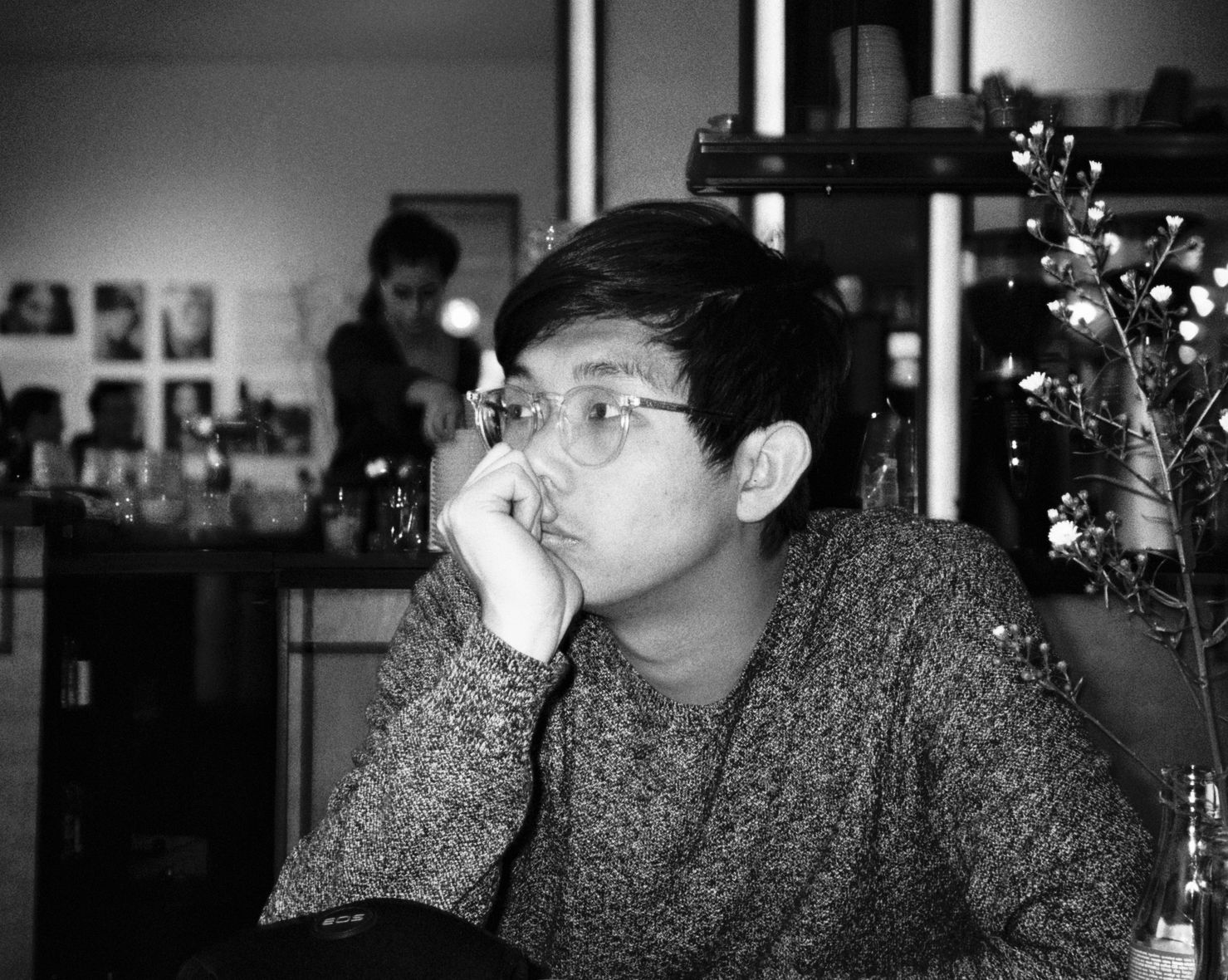
Actors:Liang Ban, Li Xindi, Miao Zijin, Wan Huashan, Xie Li
Cinematographer: Xie Junqian
Lighting gaffer: Sun Junwei