2026.04.04 Saturday 19:30
Location
Fotografiska, No.127 Guangfu Road, Jing’an District, Shanghai
Artist:Ziyang Wu
Guest Artists:Iris Long, Xiaoyu Lu
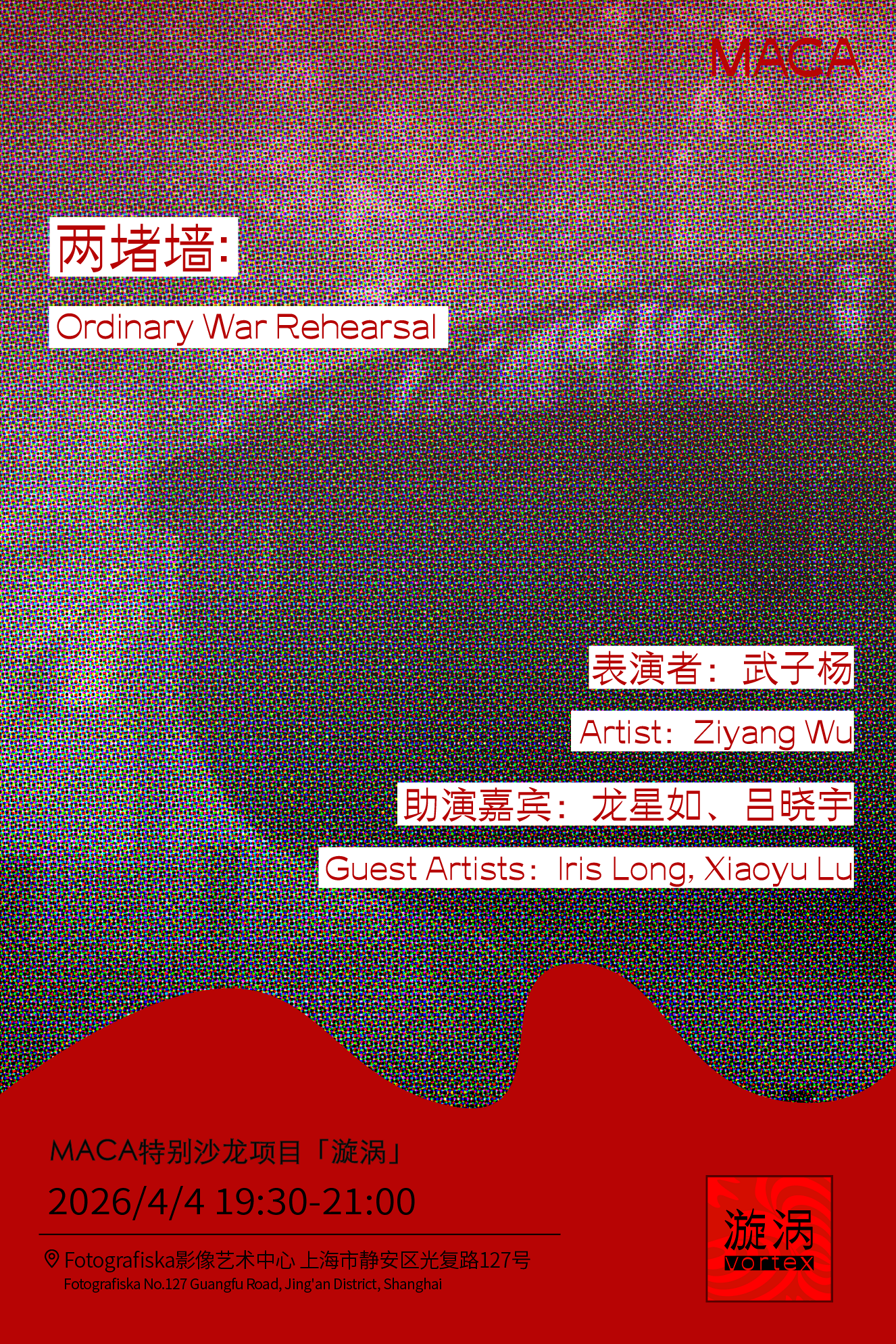
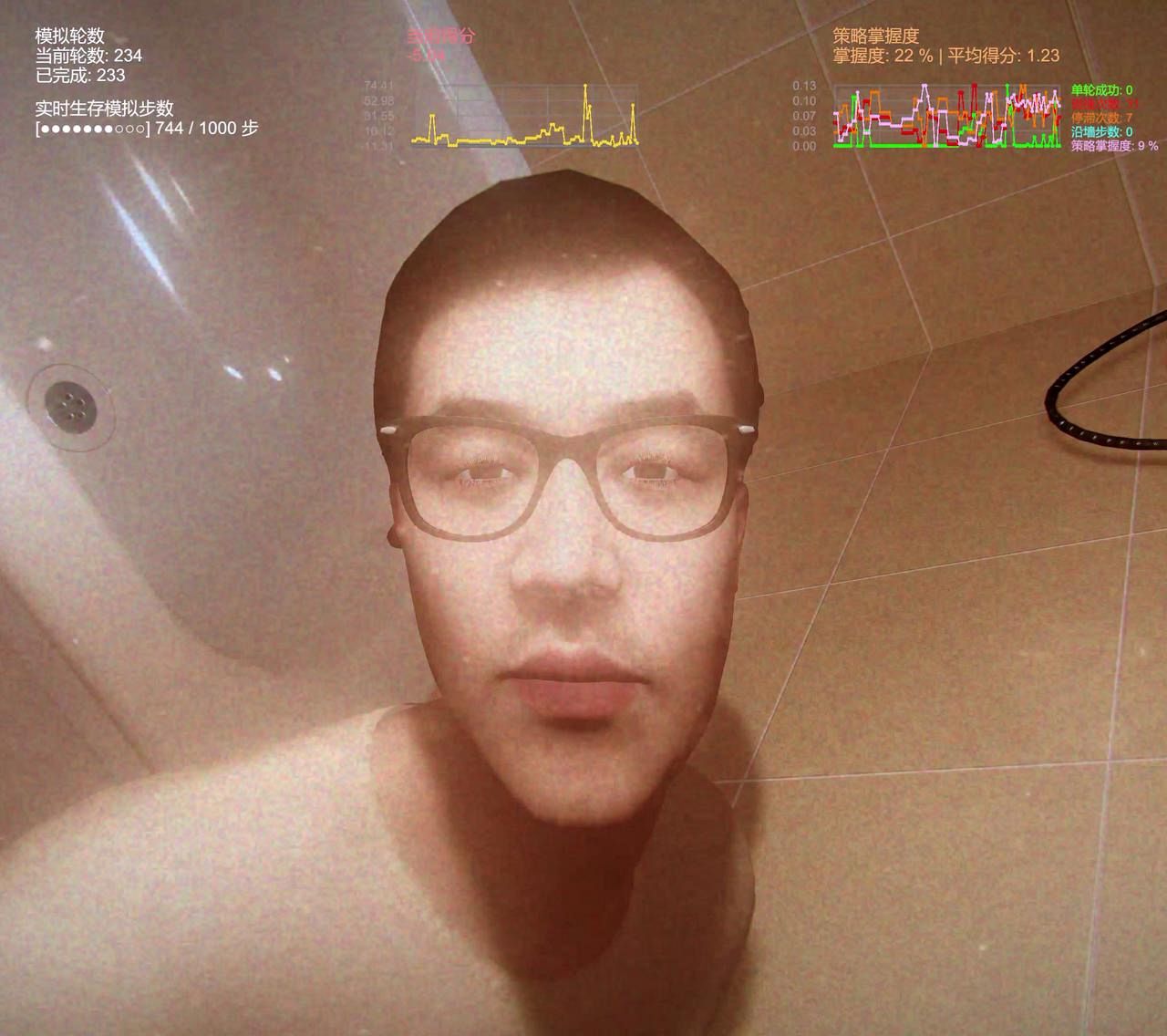
"Two Walls: Ordinary War Rehearsal" is an interactive AI simulation and lecture performance, born from my personal experience of sheltering from drone attacks in Kyiv and the survival principle known as the "two-wall rule."
The piece presents a dual-layered narrative. On the surface, an AI (the "Sanctuary Algorithm") coldly calculates the optimal posture to evade an attack in real-time across five surreal scenarios: a hotel, a border, a club, a train, and a park. Beneath this, an inner layer interweaves my personal memories, dark humor, and philosophical reflections through voice-overs, dialogue, and on-screen text.
While war simulations typically focus on the macrocosm of combat, this work, through the form of a lecture performance, shifts the perspective entirely to individual survival under the shadow of war. The audience witnesses the AI's brute-force calculation process alongside the absurd, insignificant, yet resilient struggle of an individual confronting the grand war machine. What is ultimately presented is not a film, but a playable philosophical fable, an "ordinary war rehearsal" that explores the very absurdity of survival in the face of algorithmic violence.
Ziyang Wu is an artist. His works have exhibited internationally, including ICA Philadelphia, Rhizome at the New Museum, Walker Art Center, PinchukArtCentre, Hek Basel, Seoul Mediacity Biennale, Ars Electronica, Siggraph Asia, SXSW, M+ Museum, and more. His recent fellowships include the shortlist of the “Future Generation Art Prize”, “The Randall Chair” award at Alfred University, MacDowell Fellowship and more. He is the chair of Open Media Department at School of Intermedia Art at China Academy of Art, adjunct professor at School of Visual Arts, and is a former member of NEW INC at the New Museum.
Iris Long is a curator, Berggruen Fellow (2022–2023), Fellow of the Royal Astronomical Society, and amateur radio enthusiast. Her research focuses on China’s technological infrastructures and the psychogeography of technology. She has curated numerous exhibitions engaging with science and technology, and her research has been presented and published at institutions including the Max Planck Institute for Art History in Florence (Kunsthistorisches Institut in Florenz), the Cambridge Centre for Arts, Humanities and Social Sciences at the University of Cambridge, the Warburg Institute, the Institute of Advanced Studies / Institute of Outer Space at University College London, and the ZKM Center for Art and Media. Personal website: irislong.xyz
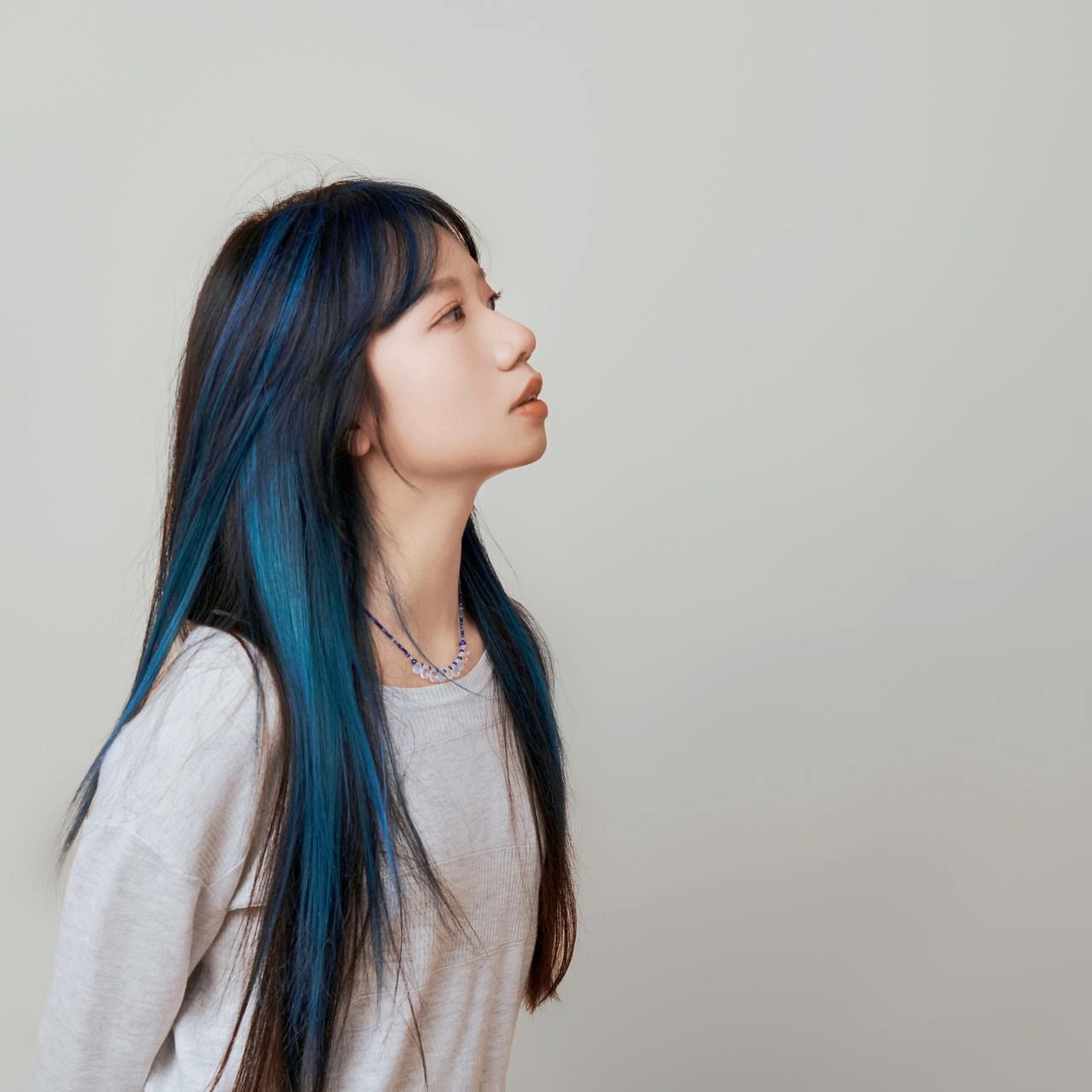
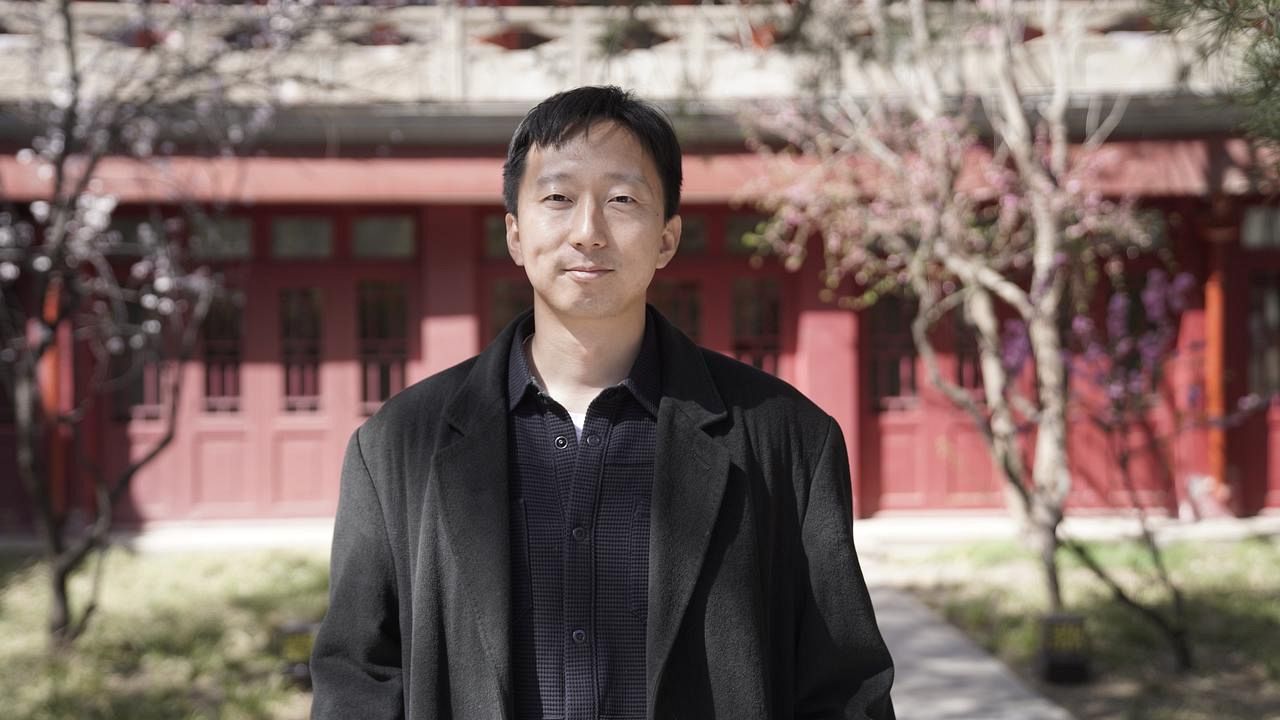
Xiaoyu Lu is a scholar of international relations and a novelist. He is Assistant Professor at the School of International Studies at Peking University, a Berggruen Fellow, and founding director of PeaceLab.
His research focuses on international conflict, mediation, and peace processes. He has conducted fieldwork in Ukraine, Palestine, Syria, Lebanon, Myanmar, and Colombia, examining the lives of ordinary people in war and the evolving practices of conflict mediation and diplomacy.
Lu received his MSc and DPhil in Politics from St Antony’s College, University of Oxford. He was previously a Research Fellow at the Strategic and Defence Studies Centre at the Australian National University and worked at the United Nations Development Programme. He is the author of the novel The Man Under Water and the non-fiction book Lima Dream。
VORTEX, launched by the MACA in Shanghai in 2022, is an art and cultural salon in the form of lecture performances occurring once or twice every month. The programme calls for non-institutionalised artistic and academic production in which contemporary art practitioners and scholars get to explore cross-disciplinarily the issues of the macro or micro, the global or local, the collective or individual. VORTEX, hence, is where you spin in the whirlpool of spontaneous whims and intuitive approaches represented by individual research and enquiries. Being present here at VORTEX, you are experiencing versatile forms of lecture performances that experiment with new mechanisms and methodologies.