 Michele Chu: gasp
Salt Instrument
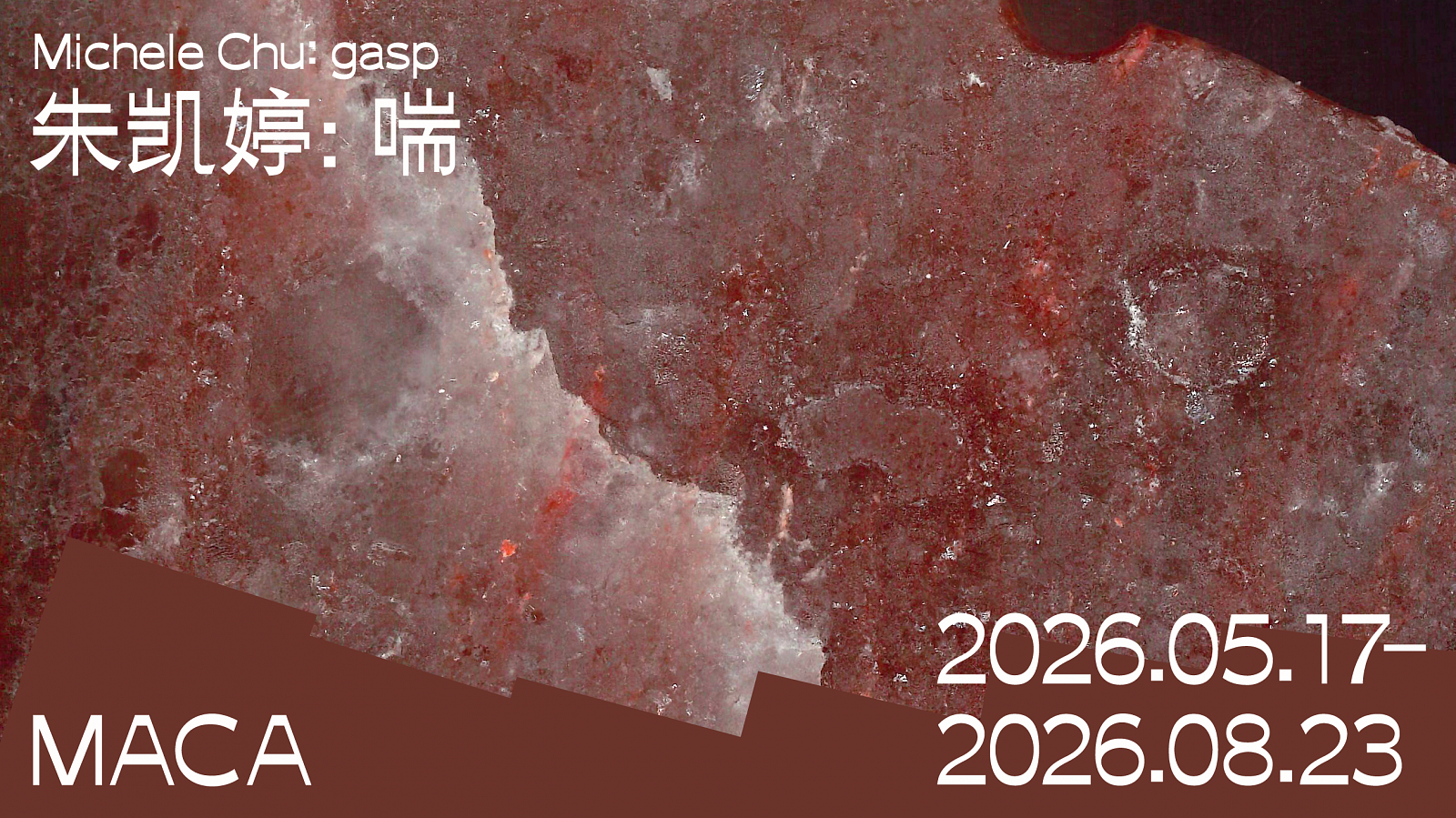
2026.06.27 Saturday 14:00
Location
MACA Art Center
Artist: Ginger Jingzhe Fan

This workshop extends the exploration of gravestone lullaby i–iv, currently on view in Michele Chu: gasp.
In this interactive sound sculpture, visitors lie on Himalayan salt bricks and experience sound waves traveling through their bodies via bone conduction. As sound moves through bone and tissue, the body itself becomes part of the sculpture’s resonant system.
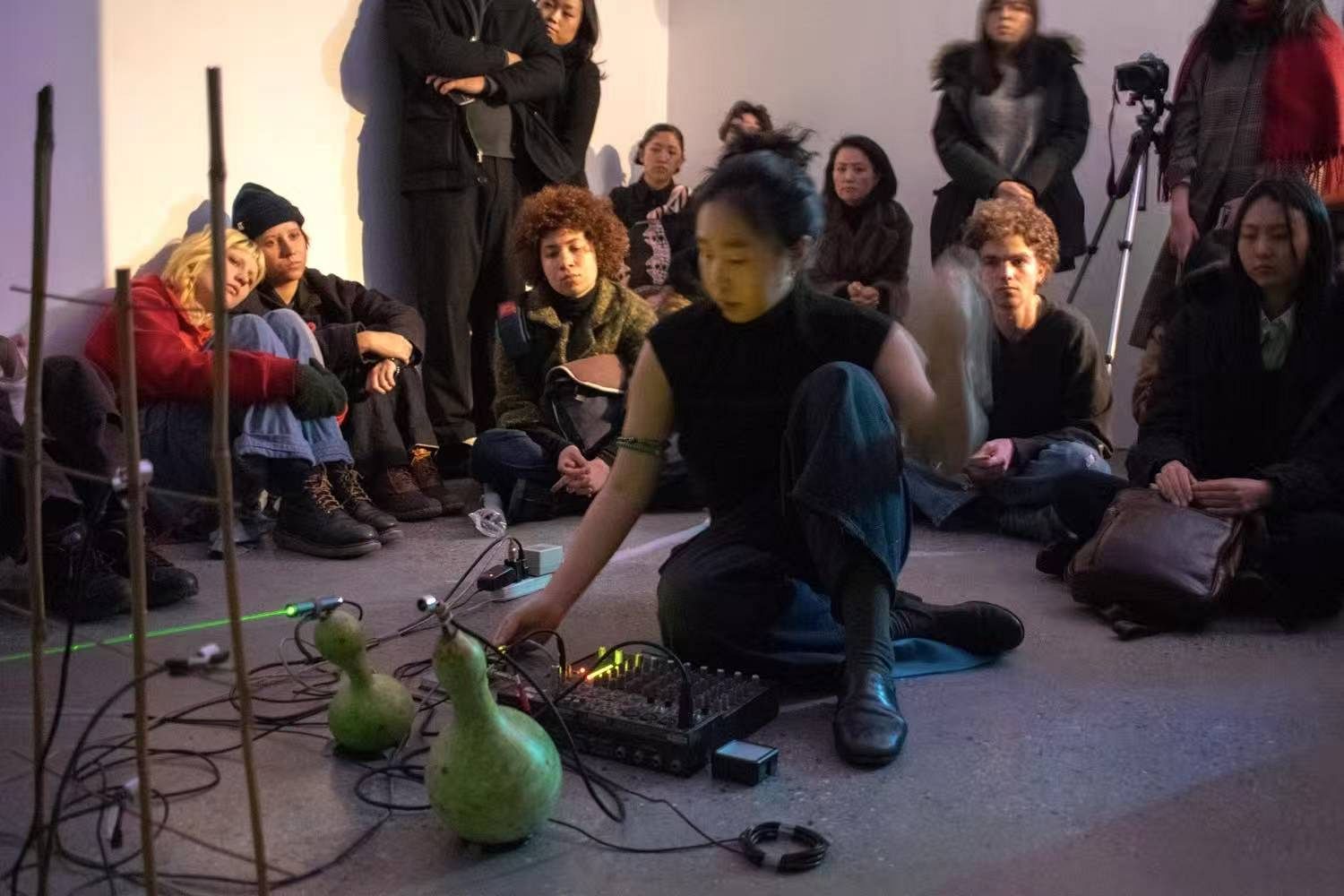
Building on this sensory experience, sound artist ginger Jingzhe Fan will guide participants through an afternoon of experiments exploring the subtle relationships between sound, vibration, and matter.
In the eighteenth century, German physicist Ernst Chladni drew a violin bow across a metal plate sprinkled with sand. Invisible sound waves suddenly became visible, leaving behind intricate geometric patterns.
The phenomenon emerges through the reflection and interference of vibrations. As waves travel across the plate, collide, and overlap, they form what are known as standing waves. Between the regions of greatest movement lie points that remain perfectly still: the nodes.
Curiously, grains of salt do not gather where vibration is strongest. Instead, they migrate toward these quiet points.
They flee vibration.
They resist the wave.
When the performance ends and motion subsides, the remaining grains become a visible trace of the sound event that has just taken place.
So is salt listening to sound, or avoiding it?
Does it record sound itself, or the places where sound disappears?
This weekend, we invite you to bring a container that holds special meaning for you and join us in a sensory experiment exploring sound, matter, and space.
Together we will build instruments, transform everyday objects into speakers, and even attempt to touch the skin of space itself—composing an improvised performance that can never be repeated.
About the artist: Ginger Jingzhe Fan
Ginger Jingzhe Fan graduated from The Cooper Union in New York. Her practice moves across sound, writing, and installation.
In her performances, she works with self-built electronic instruments, including RF listening devices, contact microphones, and ultrasonic sound fields. Together with plants and found objects, these elements form temporary ecosystems in which signals, materials, and living bodies coexist.
Born on Jingzhe—the solar term marking the awakening of insects—Fan approaches sound as a way of sensing the emergence of place and the circulation of energy. Her works begin with processes of accumulation and release, composing drones through acts of extension, concentration, and rupture. Sustained sound becomes a temporal structure through which listening encounters moments of tension, suspension, and transformation.
Attentive to subtle forces embedded within environments, her practice explores how energy gathers across landscapes, objects, and bodies, and how these latent intensities shape our experience of time and presence.