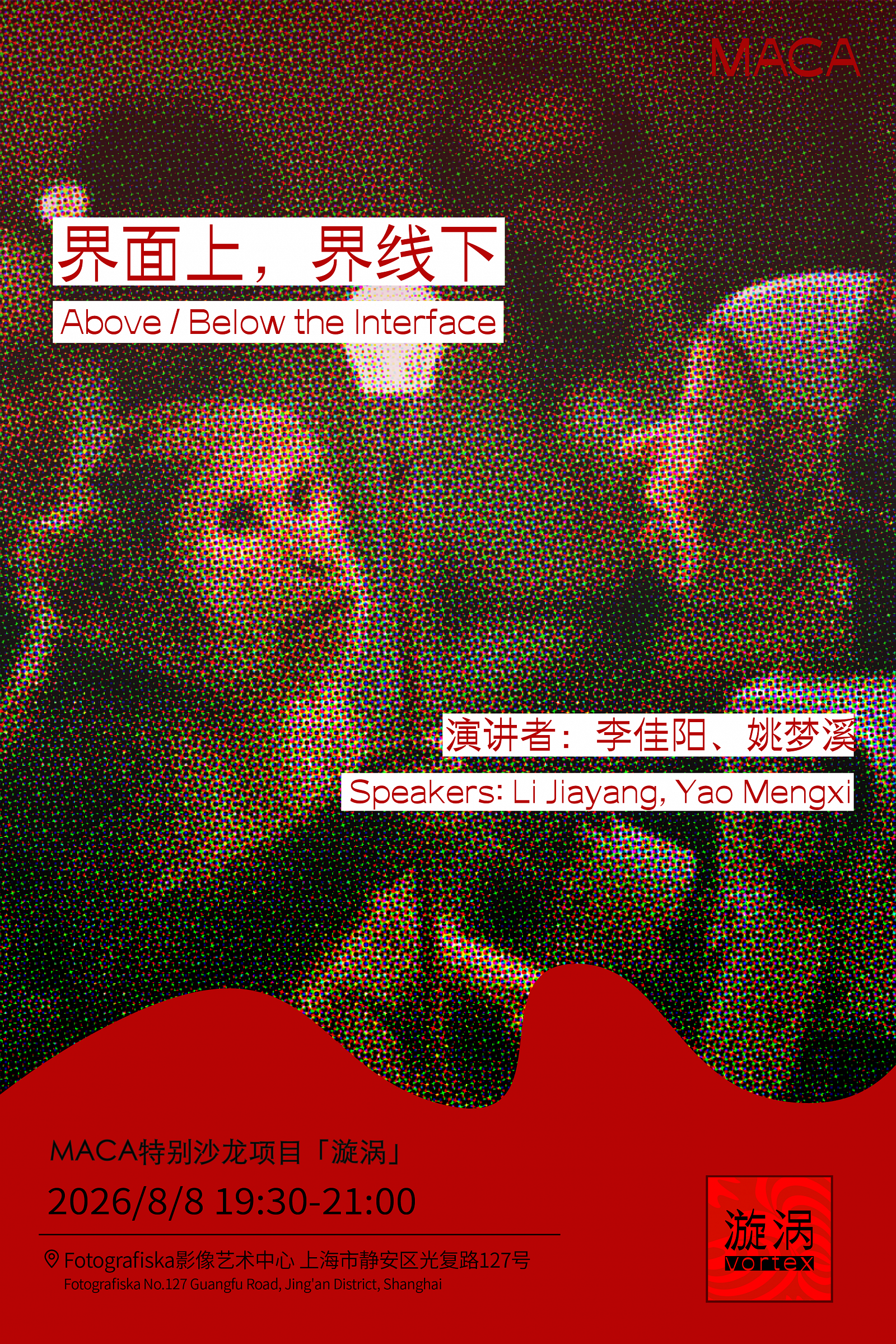
2026.08.08 Saturday 19:30
Location
Fotografiska, No.127 Guangfu Road, Jing’an District, Shanghai
Speakers:Li Jiayang, Yao Mengxi
Imagine that your ritual for “clocking off” after work is booking a flight without Wi-Fi.
For Li Jiayang, an employee at a major technology company, this is the only way she can escape the relentless, 24-hour digital workplace. At thirty thousand feet above the ground, it is only through a physical disconnection from the network that she can reclaim a brief moment of “the right to be offline.” The irony is that her work itself involves applying artificial intelligence to improve efficiency across different departments of the company. Yet she has become a caged creature of the very “efficiency era” she helps to construct. Her situation is not an isolated case, but rather a reflection of a new configuration of labor interfaces emerging today.
As Jensen Huang, the “godfather of AI computing,” imagines that artificial intelligence will give rise to countless new professions, Wall Street forecaster Ray Dalio warns that middle management and white-collar positions will face profound disruption. Although technology giants frequently promote ideas such as “AI democratization” and the notion that “everyone can become a programmer,” this revolution appears to be following another trajectory — one in which wealth is drawn, like a magnet, toward the apex of the pyramid.
Beneath the polished surface of the interface lies a gray, rough boundary of power.
Welcome to the magical realism of the digital age — where technology liberates productivity, yet may simultaneously imprison the producers themselves.
This lecture-performance does not seek to ask whether “AI will replace humans.” Instead, it attempts to unpack several underlying structural questions.
In their work Anatomy of an AI System (2018), scholar Kate Crawford and artist Vladan Joler take an apparently lightweight smart speaker and unfold the hidden systems behind it: data annotation, logistics, mineral extraction, and infrastructure. They remind us that behind every form of “automation” lies an invisible network of industrial clusters; behind every position in the workflow, there is a human laborer.
As generative AI shifts from being a tool to becoming a colleague, the boundaries of labor are being redrawn.
If Crawford and Joler reveal the material labor beneath AI systems, artist Trevor Paglen exposes another dimension of this labor: the human being itself has become a resource to be extracted. Image-recognition systems reduce human subjects into datasets — samples available for classification, processing, and extraction. Alongside this technological logic of turning humans into resources, certain forms of employment in traditional industries are indeed disappearing at an accelerating pace.
This has generated widespread anxiety, but it does not necessarily signify a total collapse.
The International Labour Organization (ILO), in its 2023 research on generative AI, points out that technological exposure does not equal job elimination. A more common outcome is the restructuring of task distribution, work quality, and relationships within occupations. Technological tools are not merely efficiency machines accelerating under the drive of capital; they may also represent an opportunity for the redistribution of factors of production amid the global restructuring of computational power.
In its report Two Endgames for AI, Deutsche Bank raises a provocative speculation: could the “realm of freedom” envisioned by Marx more than a century and a half ago become achievable through a comprehensive restructuring of labor relations?
To respond to such grand narratives, we must return precisely to the most visible and invisible layers of technology.
Above the interface: how do humans sense that they are being absorbed into the system?
Below the boundary: who is doing the training? Who is exercising power?
At the intersection of these two questions lies the hidden terrain where all possible futures are negotiated.
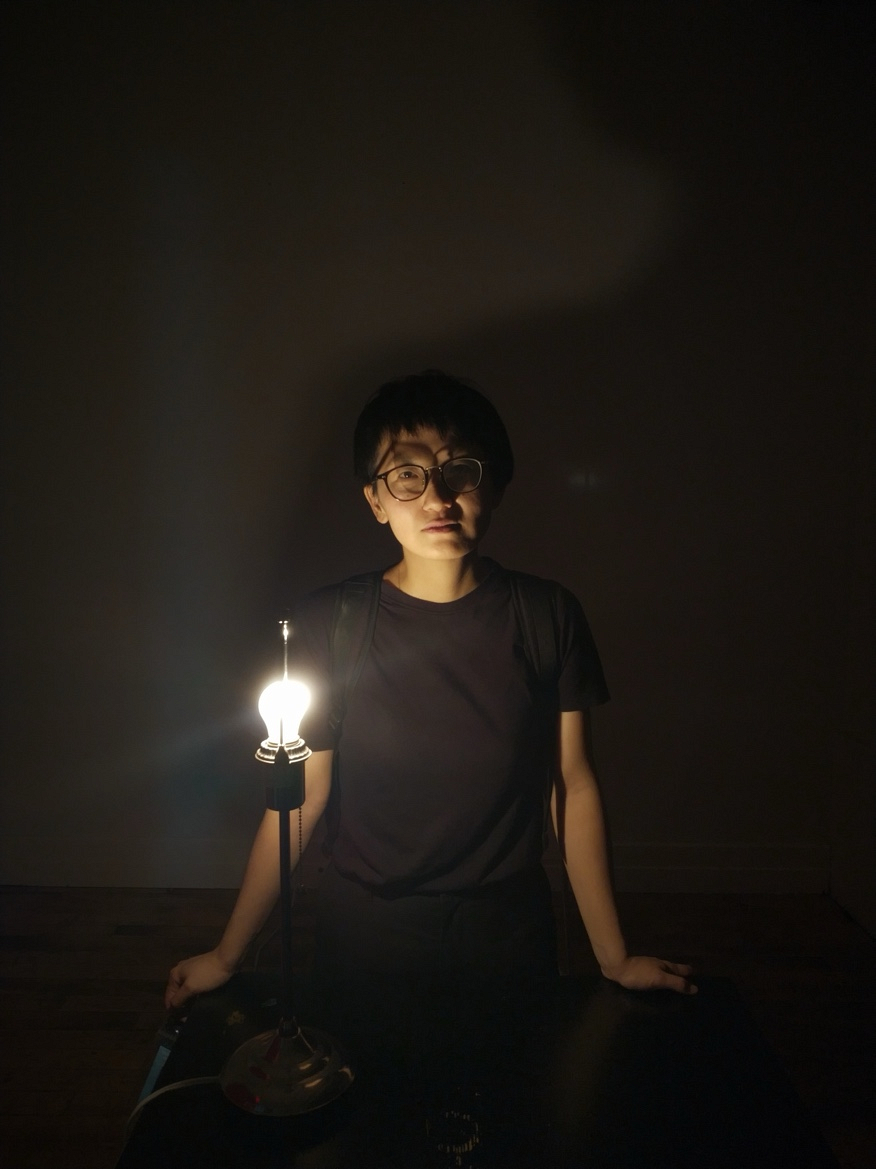
Li Jiayang is an artist, designer, and AI product practitioner whose practice focuses on generative model training, workflow design, and the development of agent systems. Her work moves across artistic creation and platform-based production, while also reflecting firsthand the transformation of designers’ roles — from producing aesthetic outcomes to shaping methods of production. In this performance-lecture, she will approach AI from multiple perspectives as an AI artist, designer, model trainer, and evaluator, examining how human experience, judgment, and aesthetics are absorbed into AI systems, while returning to a fundamental question: who, ultimately, does AI empower?
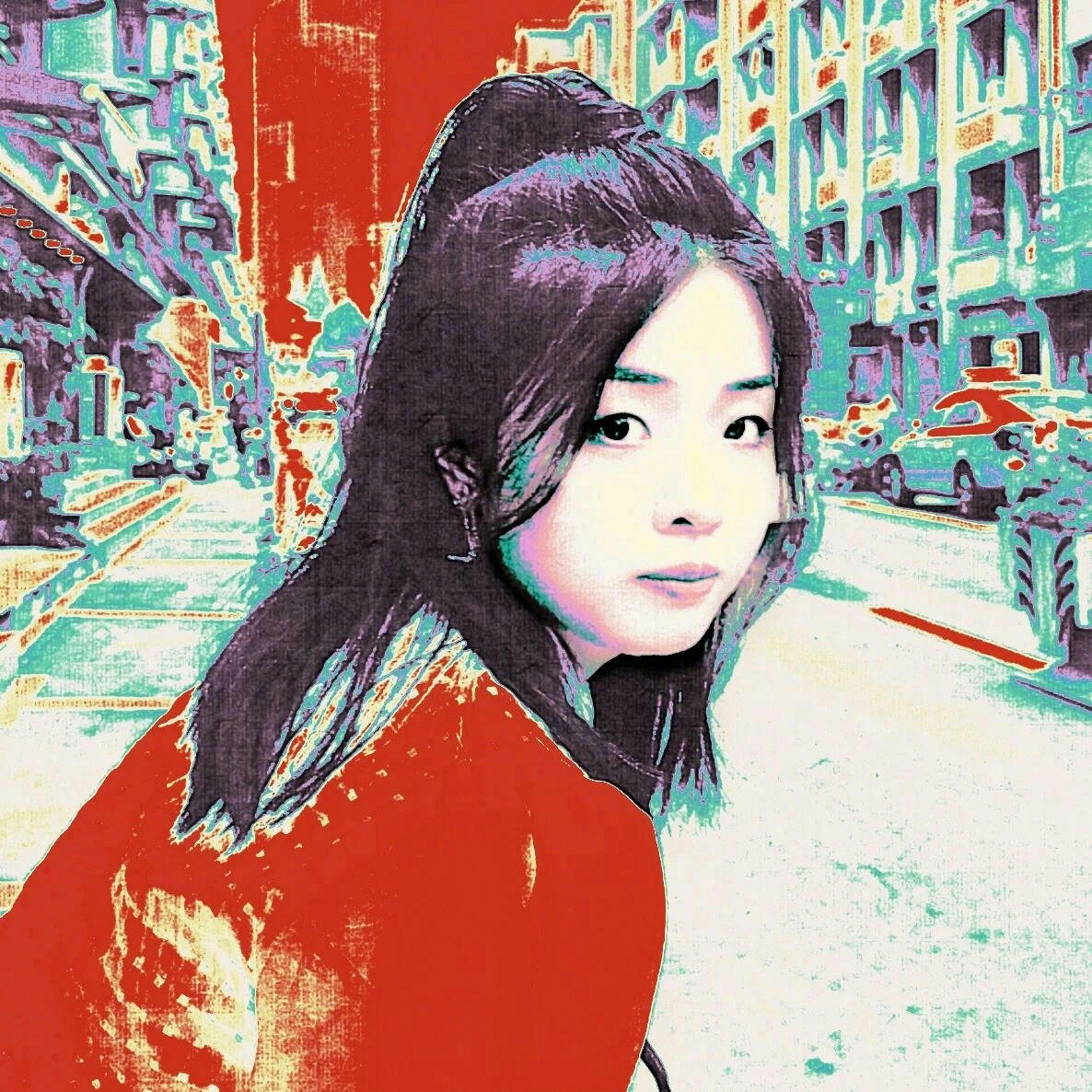
Yao Mengxi is a curator, researcher, and artist, and a co-founder of Radical Space (2014–2018) and the Chongqing Institute of Work (2018–present). She currently lives and works in Shanghai. Her research interests include self-organization in contemporary art, spatial production and local narratives, forms of labor and economic phenomena, and the experiences of individuals amid global geopolitical transformations. Her curatorial projects include The Jealous Potter (UCCA Clay, 2025), A World Map Without Utopia Is Not Even Worth a Glance (Beijing Commune, 2017), Toward the Emergence of Resistance | Emergency Action! (Taikang Space, 2016), and Nightmare of Exhibition (Part II): The Bilateral Theater (Power Station of Art, Shanghai, 2015), among others.
VORTEX, launched by the MACA in Shanghai in 2022, is an art and cultural salon in the form of lecture performances occurring once or twice every month. The programme calls for non-institutionalised artistic and academic production in which contemporary art practitioners and scholars get to explore cross-disciplinarily the issues of the macro or micro, the global or local, the collective or individual. VORTEX, hence, is where you spin in the whirlpool of spontaneous whims and intuitive approaches represented by individual research and enquiries. Being present here at VORTEX, you are experiencing versatile forms of lecture performances that experiment with new mechanisms and methodologies.